

Why Your Dentist Says Everything Looks Normal… But Your Jaw Still Hurts
You’ve had your dental examination. Maybe you’ve even had X-rays taken.
And the result?
“Everything looks normal.”
But your jaw still hurts.
It still clicks or pops. Your face feels tired. You’re waking up with headaches. Your neck is constantly tight. Or chewing just doesn’t feel as comfortable as it should.
So how can everything look normal when you clearly don’t feel normal?
The answer may be simpler than you think:
Not every source of jaw pain is something that will show up on an image.
And understanding what imaging can—and cannot—tell us is an important part of understanding persistent jaw pain.
First, “normal” is actually useful information
When your dentist examines your mouth or orders imaging, they're looking for information that helps them determine what may—or may not—be contributing to your symptoms.
If they don't find an obvious dental or structural problem, that doesn't mean:
“There's nothing wrong with you.”
It means:
“We haven't identified an obvious problem with the things we've examined.”
That's a vital difference and it can also be good news.
But if you're still experiencing pain, it may mean that another part of the picture needs to be considered.
Different imaging show us different things
There isn't one image that tells us absolutely everything about the jaw.
Depending on the clinical situation, your dentist, physician or another qualified healthcare provider may use or recommend different types of imaging.
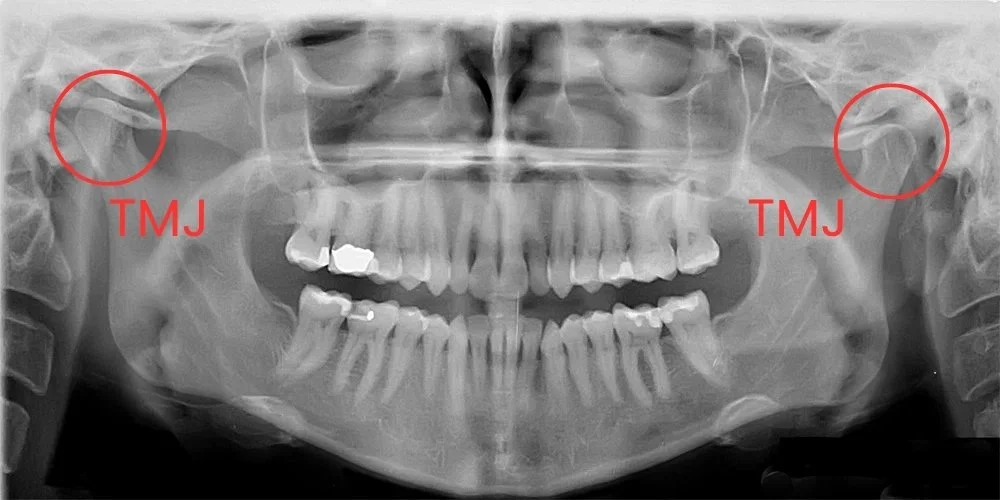
Dental X-ray
Traditional dental X-rays are incredibly valuable for examining your teeth and surrounding structures.
A panoramic X-ray provides a broader two-dimensional image that also includes portions of the jaw and temporomandibular joints.
But these images aren't designed to tell us how well your jaw muscles are functioning throughout your day.
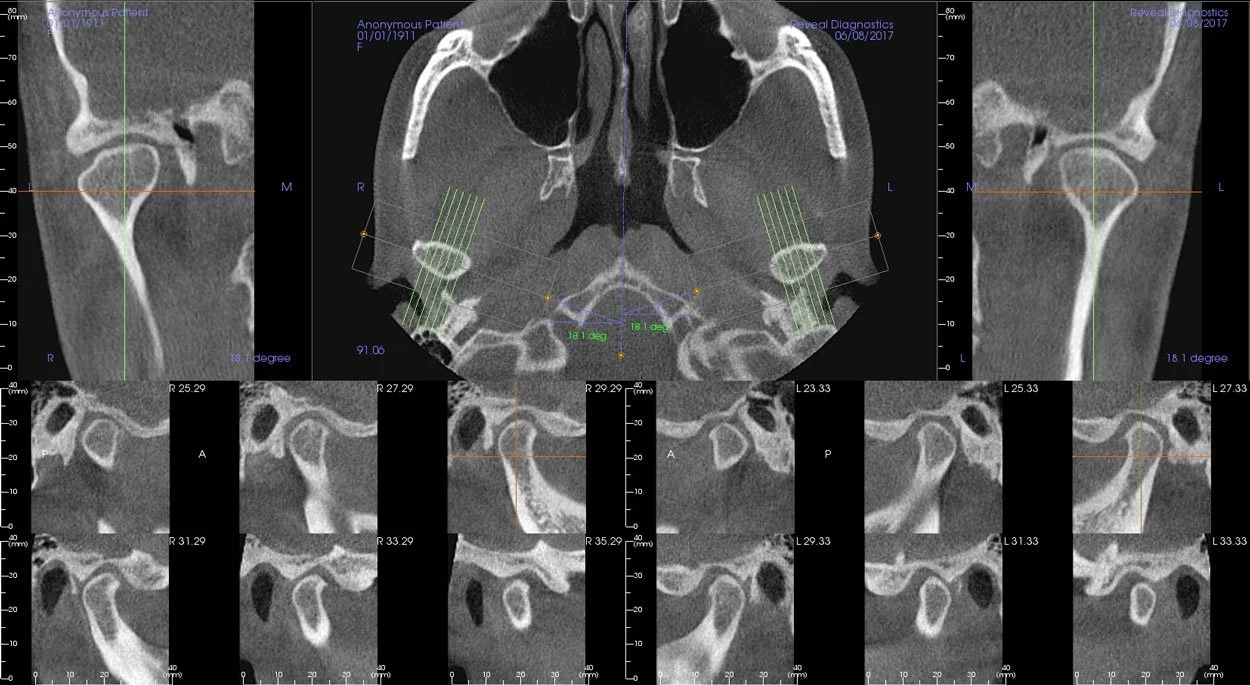
CBCT
You may also hear the term CBCT, or cone-beam computed tomography.
CBCT provides three-dimensional images and much more detailed information about the bony structures of the teeth and jaws than conventional two-dimensional dental imaging.
It may be used when more detailed information about those structures is clinically indicated.
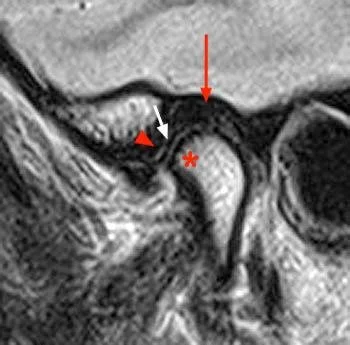
MRI
Rather than primarily looking at bone, MRI (Magnetic Resonance Imaging) can provide information about soft tissues within the temporomandibular joint that aren't seen the same way on conventional dental X-rays.
Whether any of these types of imaging are appropriate depends on your individual situation and is a decision for the healthcare professional responsible for investigating those structures.
But here's the part that's particularly important for someone living with symptoms of TMJD:
An image and a functional assessment answer different questions.
Imaging can't tell us everything
Imagine you've spent an entire weekend gardening.
By Sunday evening, your hamstrings are tight, your shoulders ache and your lower back is exhausted.
If we took an X-ray, would we expect it to show us exactly how tired those muscles feel?
Of course not…. but the image isn't useless.
We're simply asking it a question it wasn't designed to answer.
The same principle applies to your jaw, head and neck.
The muscles responsible for moving and stabilizing your jaw can become painful, tender, fatigued or overloaded.
And that's where a functional assessment becomes particularly important.
So rather than interpreting your diagnostic imaging or diagnosing a medical condition, I'm looking at a different piece of the puzzle:
How are these areas actually functioning?
Your jaw doesn't work alone
One of the biggest misconceptions I encounter is the idea that if your jaw hurts, the problem must be isolated to the jaw joint itself.
Your jaw is part of a much larger system…. The Stomatognathic System
The stomatognathic system is the biological unit of the body that includes the mouth, jaws, teeth and connected facial and neck structures. Words for mouth (stoma) and jaw (gnathic) make up its name. It works as a single system to help you eat, speak, and br
Within that system:
Muscles have to coordinate to open, close and move your jaw.
Your neck provides an important physical relationship with your head and jaw.
Your tongue moves constantly during speaking, chewing and swallowing.
And then there are the things you may be doing for hours every day without realizing it.
Maybe you:
Clench your teeth while concentrating
Hold tension in your jaw while driving
Chew predominantly on one side
Notice increased jaw tension during stressful periods
Regularly wake with tired or sore jaw muscles
Develop neck tension alongside your jaw symptoms
None of those observations automatically tells us why you're experiencing pain.
But they give us information about how your jaw and surrounding tissues are functioning.
And that's information worth investigating.
That's why a functional assessment looks different
When I assess someone with symptoms of TMJD, I'm not trying to replace the examination they've already received from their dentist, physician or another healthcare provider.
I'm looking at the problem through a different lens.
I assess things such as:
Jaw movement
Range of motion
Muscle tenderness
Soft-tissue tension
Whether certain movements reproduce your familiar symptoms
Cervical movement and function
Patterns you notice with chewing or jaw use
Clenching and other behaviours that may increase muscular workload
Breathing
Swallowing and tongue movement
I'm looking for information that helps determine whether the soft tissues, joints and physical function of the area may be contributing to the symptoms you're experiencing.
And sometimes the assessment tells me something equally important:
This needs to go back to your dentist, physician or another healthcare provider for further investigation.
Different Pieces of the Same Puzzle 🧩
Diagnostic imaging can provide incredibly valuable information about specific structures.
A functional assessment provides different information—how your jaw moves, how the surrounding muscles and joints are functioning, what reproduces your symptoms, and what may be contributing to the physical demands placed on the area.
Sometimes one piece provides the answer. Sometimes we need several.
So if you've been told that your dental examination or imaging looks normal but you're still experiencing jaw pain, headaches, facial fatigue, muscle tension or difficulty chewing, it doesn't mean your symptoms aren't real.
It may simply mean the source of those symptoms hasn't been identified yet.
And that's when it can be helpful to shift the question from:
“What does the image show?”
to:
“How is my jaw actually functioning?”
Looking Beyond the Jaw at Welland TMJ
Jaw pain rarely exists in isolation.
That's why my assessments don't stop at the spot that hurts.
I want to understand how your jaw moves, how the surrounding muscles are functioning, what movements or activities reproduce your symptoms, and what may be increasing the demands placed on those tissues throughout your day.
But I also look beyond the jaw itself.
Your neck. Your breathing patterns. Your tongue function. Your posture. Your clenching habits. How you chew. How you swallow. The things you do repeatedly—often without realizing you're doing them.
Individually, one finding may not explain your symptoms.
But when we start putting those pieces together, patterns can emerge.
And that's really the purpose of the assessment.
Not simply to identify where you hurt—but to better understand why those tissues may be hurting in the first place.
Because your jaw isn't an isolated part of your body.
It's one piece of a much bigger picture.
***
About The Author
Melissa Violette, RMT, is @thetongueandjawtherapist . She is a Registered Massage Therapist in Ontario and the founder of Welland TMJ, a clinic focused on the assessment and management of jaw-related pain and dysfunction. Melissa has advanced training in temporomandibular joint disorders (TMJD), myofunctional therapy, and soft tissue–based approaches to jaw, neck, and facial pain. Her work emphasizes thorough assessment, education, and individualized care to help patients better understand the factors contributing to their symptoms.
To book an appointment, visit Welland TMJ Booking
Medical Disclaimer
The content on this blog is intended for general educational and informational purposes only. It is not intended to replace professional medical advice, diagnosis, or treatment. Always seek the guidance of a qualified healthcare provider with any questions you may have regarding a medical condition or treatment plan.