

One of the Most Common Things I Hear in the Clinic - "I Feel So Tight"
A few weeks ago, I was working with a patient who is incredibly bright, energetic, and curious. Like many people I see, he's interested in understanding why his body feels the way it does. Throughout our appointment, he kept returning to a familiar theme:

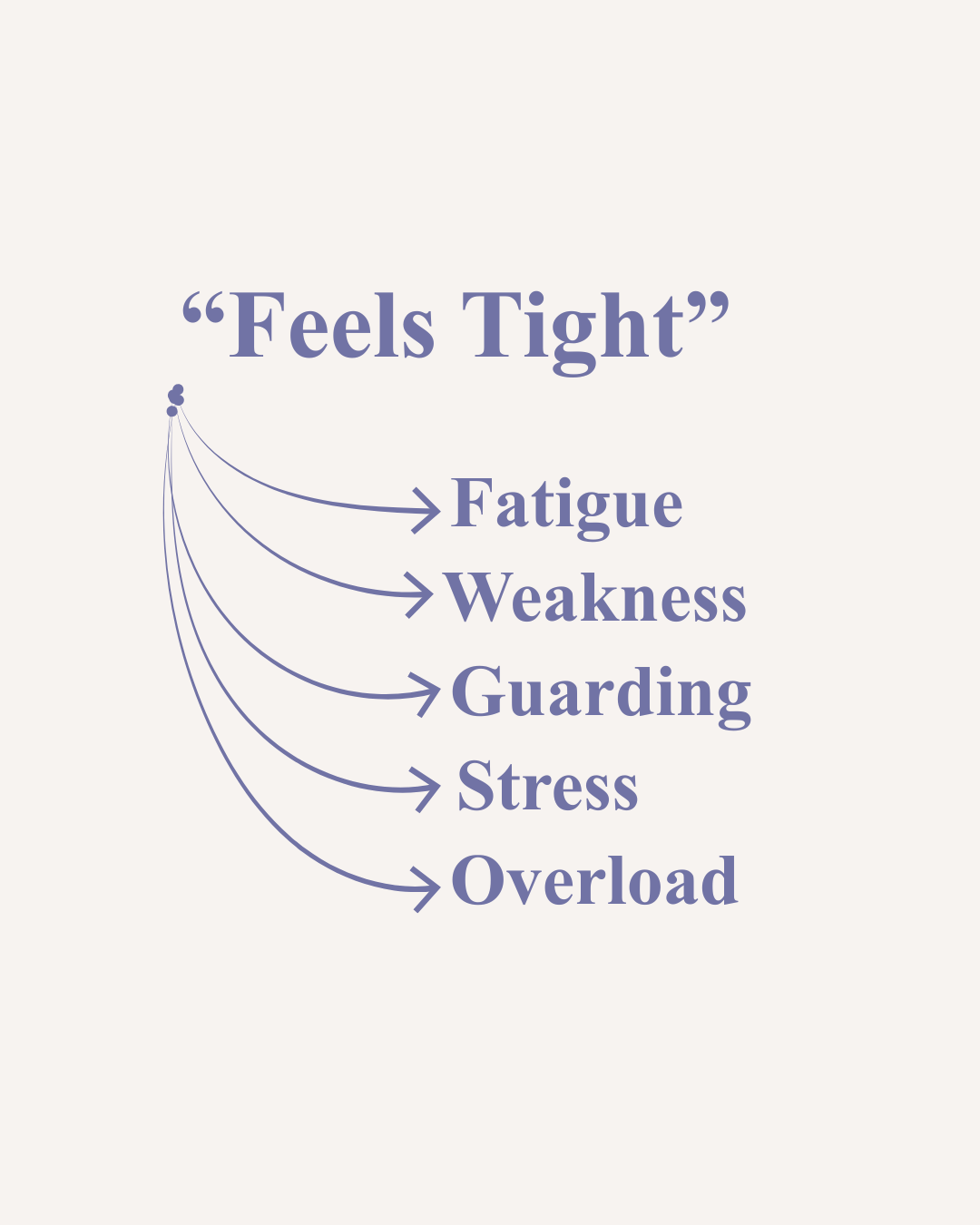
“Everything Feels Tight”
His neck felt tight.
His shoulders felt tight.
His jaw felt tight.
And honestly? That's one of the most common things I hear in the clinic.
Not just from this patient. From almost everyone that’s come to see me as a massage therapist.
In fact, if I had a dollar for every time someone told me they felt tight, I could probably retire early.
The challenge is that "tight" can mean many different things.
And what “feels” tight isn't always what is actually tight.
The Problem With the Word "Tight"
When most people say a muscle feels tight, they're describing a sensation.
They're describing how their body feels.
The problem is that sensations and physical tissue properties aren't always the same thing.
For years, many of us were taught to think of tightness as a simple mechanical problem:
Muscle feels tight.
Therefore, muscle must be short.
Stretch it.
Problem solved.
But the human body is rarely that simple.
Research over the past couple of decades has shown that the sensation of tightness does not always correspond to measurable changes in muscle stiffness or length. In many cases, what changes after stretching isn't necessarily the tissue itself, but our tolerance to the sensation being produced.
In other words:
Feeling tight and being mechanically tight are not always the same thing.
So What Does "Actually Tight" Mean?
There are situations where tissues truly have reduced extensibility. They are actually shortened in length.
Following injury, surgery, prolonged immobilization, or certain medical conditions, muscles and connective tissues can become physically less flexible.
This is what most people imagine when they think of a tight muscle.
But for the average person walking into my clinic with jaw pain, neck tension, headaches, or shoulder discomfort, this is often only part of the story.
Many times, the issue isn't that the muscle has become dramatically shorter.
It's that the nervous system has decided that area needs protection.
And one of the ways the body creates protection is through tension.
That’s why it’s SO important to take the time to actually assess length, strength and mobility.
The Muscle That Feels Tight Might Actually Be Working Overtime
Imagine asking one employee to do the work of three people.
Eventually they're going to become tired, overworked, and probably complain.
Muscles are no different.
A muscle can feel tight because it's being asked to work constantly.
Poor movement patterns. Postural demands.
Compensation for another weak area.
Clenching. Guarding. Stress.
Over time, that muscle never really gets a chance to relax.
The result? It feels tight.
But stretching it repeatedly may only provide temporary relief because the underlying workload hasn't changed.
Sometimes the "Tight" Muscle Is Actually the Weak Muscle
This is where things get really interesting.
Many people assume weakness and tightness are opposites.
They're not.
In fact, a muscle can be both.
When a muscle lacks strength or endurance, the body often compensates by increasing resting tension and protective activity.
Think of it like gripping a pen too hard because your hand is getting tired.
The increased tension isn't a sign of strength.
It's a sign that the system is struggling to do its job efficiently.
This is why some people stretch the same area for years without lasting results.
The muscle isn't necessarily asking for more length.
It may be asking for more capacity.
Why Strength Can Sometimes Reduce Tightness Better Than Stretching
One of the most surprising things patients experience is feeling less tight after strengthening.
At first glance, that seems backwards.
Wouldn't strengthening create more tension?
Not necessarily.
When muscles become stronger and better coordinated, they often don't need to work as hard during everyday activities.
The nervous system gains confidence.
Movement becomes more efficient.
Protective tension decreases.
The result can be a noticeable reduction in the sensation of tightness.
Not because the muscle became dramatically longer.
Because the system became more capable.
The Jaw Is a Great Example
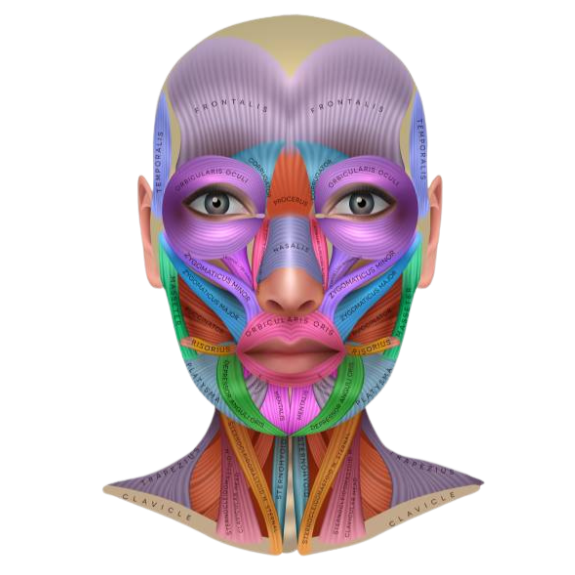
I see this all the time with TMJ-related symptoms.
People describe their jaw muscles as tight.
And sometimes they actually are.
But just as often, those muscles are overworked, fatigued, guarding, or responding to ongoing clenching patterns.
Massaging them feels wonderful.
Stretching them may help temporarily.
But long-term improvement often comes from improving how the jaw functions, moves, and tolerates load.
The goal isn't simply to make muscles looser.
It's to make the system work better.
A Different Question
Instead of asking:
"What can I stretch?"
A more useful question is often:
"Why does this area feel tight in the first place?"
Because the answer may not be more stretching.
It may be strength.
It may be movement.
It may be coordination.
It may be recovery.
Or it may be a combination of all of the above.
The sensation of tightness is real.
But understanding what is creating that sensation is where meaningful change begins.
If you constantly feel tight despite stretching, massage, or self-care, it may be worth exploring whether the issue is actually tissue length—or whether your body is asking for something different altogether.
Want To Learn More?
Check out this study
Increasing muscle extensibility: a matter of increasing length or modifying sensation?
***
About The Author
Melissa Violette, RMT, is @thetongueandjawtherapist . She is a Registered Massage Therapist in Ontario and the founder of Welland TMJ, a clinic focused on the assessment and management of jaw-related pain and dysfunction. Melissa has advanced training in temporomandibular joint disorders (TMJD), myofunctional therapy, and soft tissue–based approaches to jaw, neck, and facial pain. Her work emphasizes thorough assessment, education, and individualized care to help patients better understand the factors contributing to their symptoms.
To book an appointment, visit Welland TMJ Booking
Medical Disclaimer
The content on this blog is intended for general educational and informational purposes only. It is not intended to replace professional medical advice, diagnosis, or treatment. Always seek the guidance of a qualified healthcare provider with any questions you may have regarding a medical condition or treatment plan.