

Why Does My Jaw Click If It Doesn’t Hurt?
For many people, jaw clicking is something they notice once… and then simply learn to live with.
Maybe it happens when you yawn.
Maybe it clicks every time you chew something crunchy.
Maybe it has done it for years and has never caused pain.
Because it doesn’t hurt, it’s easy to assume it doesn’t matter.
And sometimes, that’s true.
But painless jaw clicking can also be the body’s way of signalling that the joint is moving differently than intended — even if it hasn’t yet become painful.
That’s why the real question usually isn’t “Is clicking bad?”
It’s “What is the clicking telling us?”
What Actually Causes Jaw Clicking?
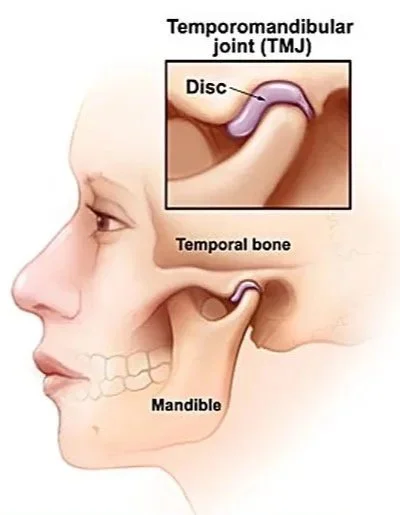
The temporomandibular joint(you have two) is a highly specialized joint with a small disc that helps the jaw move smoothly.
You can think of this disc as a cushion or guide that helps distribute force and support coordinated movement.
In many cases, clicking happens when that disc is no longer moving in perfect coordination with the jaw.
As the jaw opens, the disc may shift slightly out of position and then “recapture” as movement continues — producing the click you hear or feel.
This is one of the most common reasons for jaw clicking, but it’s not the only possibility.
Muscle tension, altered movement patterns, and changes in joint mechanics can also contribute.
If It Doesn’t Hurt, Is It Still a Problem?
Not necessarily.
Some people experience jaw clicking for years without pain, limitation, or progression.
The body is remarkably adaptable, and not every mechanical change leads to dysfunction.
This is where TMJD conversations often become unnecessarily black-and-white.
A clicking jaw is not automatically something to panic about.
At the same time, it’s not something that should always be dismissed simply because it isn’t painful right now.
Painless clicking often falls into a “monitor and understand” category rather than an “ignore forever” category.
When Clicking May Be Worth Paying Attention To
Clicking tends to become more clinically relevant when it changes or is accompanied by other symptoms.
For example:
the clicking becomes louder or more frequent
your jaw feels tight or fatigued
opening feels restricted
chewing feels uneven
headaches or facial tension begin appearing
the jaw occasionally catches or locks
These changes can suggest the joint is under increasing strain or that compensatory patterns are developing.
The earlier these patterns are understood, the easier they often are to address.
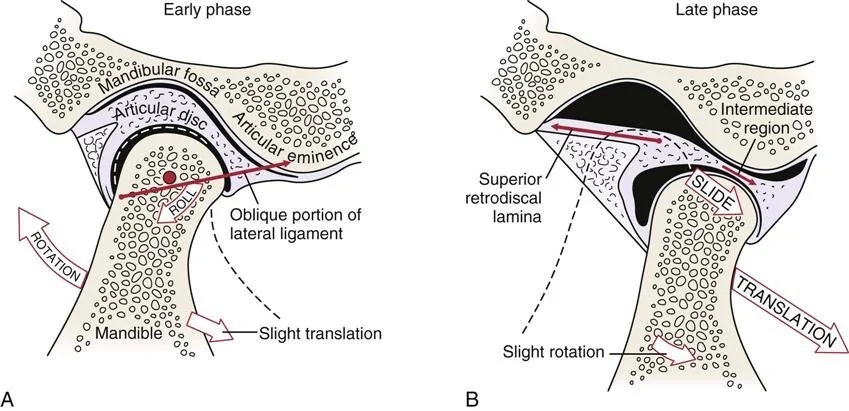
How The TMJS and their discs should move.
Why Clicking Often Gets Ignored
Part of the reason jaw clicking is overlooked is that it’s surprisingly common.
People often hear:
“It clicks, but it doesn’t hurt, so don’t worry about it.”
While this advice is sometimes appropriate, it can also oversimplify what’s happening.
The absence of pain doesn’t always mean the absence of altered function.
Pain is only one form of feedback.
The body often gives quieter signals first:
tightness, fatigue, asymmetrical movement, or subtle changes in coordination.
Jaw clicking can sometimes be one of those early signals.
Why Assessment Matters More Than Assumptions
Two people can have identical clicking and very different clinical pictures.
For one person, it may be a stable, longstanding mechanical change with little concern.
For another, it may be part of a broader pattern involving muscle overload, restricted movement, clenching, or progressive dysfunction.
This is why assumptions are rarely helpful.
A structured TMJ assessment looks at:
how the jaw moves
whether movement is symmetrical
whether muscles are compensating
whether clicking is isolated or part of a larger pattern
That context matters far more than the click itself.
The Goal Isn’t to “Silence” Every Click
This is an important distinction.
Treatment is not always about eliminating joint noise.
In many cases, the priority is improving:
comfort
mobility
function
muscle balance
Sometimes clicking decreases as function improves.
Sometimes it doesn’t — and symptoms still improve significantly.
The goal is not perfect silence.
It’s better function.
The Bottom Line
A clicking jaw without pain isn’t automatically cause for concern.
But it is information.
It’s your body giving feedback about how the joint is moving — and sometimes that feedback deserves a closer look, especially if other symptoms are present.
Understanding what that clicking means in your case is often far more helpful than simply labeling it “normal” or “abnormal.”
If your jaw clicks regularly — especially alongside tightness, fatigue, headaches, or changes in movement — a TMJ-focused assessment can help clarify whether it’s simply a harmless variation or part of a larger pattern worth addressing.
***
About The Author
Melissa Violette, RMT, is @thetongueandjawtherapist . She is a Registered Massage Therapist in Ontario and the founder of Welland TMJ, a clinic focused on the assessment and management of jaw-related pain and dysfunction. Melissa has advanced training in temporomandibular joint disorders (TMJD), myofunctional therapy, and soft tissue–based approaches to jaw, neck, and facial pain. Her work emphasizes thorough assessment, education, and individualized care to help patients better understand the factors contributing to their symptoms.
To book an appointment, visit Welland TMJ Booking
Medical Disclaimer
The content on this blog is intended for general educational and informational purposes only. It is not intended to replace professional medical advice, diagnosis, or treatment. Always seek the guidance of a qualified healthcare provider with any questions you may have regarding a medical condition or treatment plan.